
By all available measures, there has been dramatic growth in the competitive bulk power market over the past decade. Despite that success, FERC’s approach to both transmission and wholesale generation has recently become significantly more regulatory. The commission is retreating from market-based pricing for generation. With respect to transmission, FERC is proceeding on a path of imposing multiple new regulations simultaneously in an extremely complex area, without the benefit of any analysis to show that the new regulations are needed or that the benefits will outweigh the costs. Clearly, that is not a path that will produce much-needed incentives to invest in transmission capacity.
FERC needs to be much more attentive to the incentives of the institutions it is creating. If the commission does require membership in RTOS, it should do so in a very flexible manner. The design of an RTO (including geographic boundaries), the functions it should perform, and the way it should perform them are very complicated issues that should be permitted to evolve over time. FERC should allocate the minimum amount of functions to the RTO and permit independent transmission companies to develop under the RTO umbrella. And, to the extent that those entities are truly independent of generation, they should be subject to a much simpler regulatory regime and exempted from open-access requirements.
Attachments
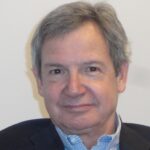
Thomas Lenard is Senior Fellow and President Emeritus at the Technology Policy Institute. Lenard is the author or coauthor of numerous books and articles on telecommunications, electricity, antitrust, privacy, e-commerce and other regulatory issues. His publications include Net Neutrality or Net Neutering: Should Broadband Internet Services Be Regulated?; The Digital Economy Fact Book; Privacy and the Commercial Use of Personal Information; Competition, Innovation and the Microsoft Monopoly: Antitrust in the Digital Marketplace; and Deregulating Electricity: The Federal Role.
Before joining the Technology Policy Institute, Lenard was acting president, senior vice president for research and senior fellow at The Progress & Freedom Foundation. He has served in senior economics positions at the Office of Management and Budget, the Federal Trade Commission and the Council on Wage and Price Stability, and was a member of the economics faculty at the University of California, Davis. He is a past president and chairman of the board of the National Economists Club.
Lenard is a graduate of the University of Wisconsin and holds a PhD in economics from Brown University. He can be reached at [email protected]